显示标签为“304”的博文。显示所有博文

2016年6月27日星期一

[ Wiki ]How to Evaluate Stainless Steel Sinks


THE KITCHEN SINK TAKES A LOT OF ABUSE. POTS AND PANS, DISHWARE AND SILVERWARE, ALONG WITH FOOD PREPARATION, ALL TAKE THEIR TOLL ON THE KITCHEN ESSENTIAL. AS THE CENTRAL FIXTURE IN THE KITCHEN, YOU WANT A SINK THAT CAN TAKE THE ABUSE AND STILL LOOK GOOD. ONE DURABLE CHOICE IS A STAINLESS STEEL SINK. BUT NOT ALL STAINLESS SINKS ARE CREATED EQUAL. TO EVALUATE A STAINLESS STEEL SINK, YOU NEED TO CONSIDER A FEW FACTORS IN ITS MAKEUP.

STEEL GAUGE

To ascertain the strength of the stainless steel, evaluate it based on its gauge. Stainless steel is a metal alloy used in a variety of applications, such as the construction of the Chrysler Building in New York. The thickness of stainless steel equates to its gauge, the number of layers that it takes to make 1 inch. For instance, 16-gauge stainless steel takes 16 layers of steel to make it an inch thick. The lower the gauge number, the thicker the steel, and the greater the sink can resist dents and scratches.

OXIDATION RESISTANCE

Oxidation leads to rust, but the chromium-to-nickel ratio in steel helps prevent it. So prior to purchase, check this ratio, as nickel gives the stainless steel strength and hardness, and chromium offers durability and shine. A typical chromium-to-nickel ratio uses 18 percent chromium and 10 percent nickel. It typically reads 18/10 on the sink's label.

FINISH TYPE

Stainless steel sinks come satin, polished, mirror or matte finishes. The type of finish you choose can be an asset or a liability in the kitchen. If you don't want to be constantly polishing the kitchen sink, avoid choosing a sink with a mirror or polish finish. These finishes show water spots and scratches. Instead, choose a sink with a matte or brushed finish that also provides resistance against scratches.

INSULATION

Some stainless steel sinks come without insulation. Without insulation, water heat escapes quickly, and the sounds are louder. Insulation helps to deaden the sound of water running in the kitchen. Check the type of insulation offered on the stainless steel sink. Foam insulation is of better quality and works more efficiently than sprayed-on insulation.

MOUNT TYPE AND SHAPE

Most kitchen sinks are available in differing mounting configurations. Some mount atop the counter and others underneath counters. Undermount units are best suited for solid surfaces such as stone or granite; they won't work with laminate materials. Choose a sink shape that matches your current sink or one that works well when remodeling.

BOWL DEPTH

Stainless steel sinks also come in multiple bowl depths. Some are shallow, while others offer a much deeper sink. Before buying your new stainless steel sink, verify it is deep enough to work with your cookware.

[ News ]Quality control mandatory for all producers: Indian Stainless Steel Development Association


KOLKATA: Indian Stainless SteelDevelopment Association (ISSDA), an apex body representing the stainless steel industry has said the recent government decision to introduce a Stainless Steel Quality Control Order (QCO), 2016 is mandatory for the stainless steel manufacturer --be it a domestic or foreign producer --rather than the end user. ISSDA has also pointed out that the order will have a minimum impact on the stainless steel utensils market since it does not cover stainless steel containing less than 1% of nickel. 

"Manufacturers would henceforth have to go in for BIS marking on the relevant grades. This provision will be applicable to all stainless steel products falling under the above mentioned standards, whether it is manufactured in India or is being imported into India. Although the QCO refers to the HS Codes, these are only indicative in nature. The QCO is applicable on the product form mentioned in the three standards and the 25 grades covered under it," N C Mathur, President, ISSDA said. 

"The QCO does not cover raw material (stainless steel) containing less than 1% nickel, while stainless steel containing less than 1% nickel is majorly used for kitchen utensils. Moreover, this QCO is not restrictive as the end user is free to use other grades of stainless steel which is not covered in the QCO. The onus to supply ISI marked stainless steel therefore, rests exclusively on the stainless steel manufacturer rather than the end user," Mathur added. 

In the recent past, the government has been issuing steel quality control orders to rein in poor quality and defective steel products being imported into the country. It has also taken a series of measures like imposition of a minimum import price, anti-dumping and safeguard duty on various steel products to check imports from countries such as China, South Korea and Japan. 

The latest QCO is applicable to some 25 grades of stainless steel which are covered under its ambit. Incidentally, the QCO mainly covers three Indian Standards (BIS) including IS 5522, IS 15997 and IS 6911. Grades covered by these three standards are: IS 5522 - 304, 302 & 430; IS 15997 - N1 (Min 1% Nickel), N2 (Min 1.5% Nickel) & N3 (Min 4% Nickel); IS 6911 - 405, 430, 410, 420S1, 420S2, 420S3, 431, 440, 201, 201A, 202, 301, 302, 304S1, 304S2, 309, 310, 316, 316L, 316Ti, 321 & 347. The grades are defined under three BIS standards (pertaining to stainless steel flat products) mentioned in the Schedule namely: IS 5522: Stainless steel sheets and strips for utensils; IS 15997: Low Nickel austenitic stainless steel sheet and strip for utensils and kitchen appliances and IS 6911: Stainless steel plate, sheet and strip -specifications.

[ Wiki ]Metallography of Stainless Steels

INTRODUCTION

Stainless steels are referred to corrosion-resistant steels that consist of up to 11% chromium. This set of high alloy steels are further divided into four categories; austenitic, martensitic, ferritic, and austenitic-ferritic (duplex) stainless steels (Figure 1). These categories describe the microstructure of an alloy at room temperature, which is considerably affected by the composition of the alloy.
Figure 1. Duplex steel etched electrolytically with 150x40% aqueous sodium hydroxide solution, showing blue austenite and yellow ferrite.
Corrosion resistance is the main property of stainless steels, and this feature can be further improved by adding certain alloying elements. Such elements impart positive effect on other properties, like oxidation resistance and toughness.
Titanium and niobium, for example, boost resistance against inter-granular corrosion as they take in the carbon element to produce carbides; nitrogen to increase strength, and sulfur to increase machinability because it form tiny manganese sulfides that lead to short machining chips. Stainless steels have excellent surface finishes and corrosion resistance, so they play a major role in the medical, aircraft, food and chemical industries, in architecture, professional kitchens, and jewelry.
Metallography of stainless steels is an important part of the overall quality control of the production process. The important metallographic tests are as follows:
  • Detection of delta ferrite and sigma phase
  • Measurement of grain size
  • Assessment and distribution of carbides
In addition to this, metallography is also utilized in failure analysis of oxidation and corrosionmechanisms.

DIFFICULTIES DURING METALLOGRAPHIC PREPARATION

Grinding and Polishing

This involves the deformation and scratching of austenitic and ferritic stainless steels (Figure 2); inclusions and carbides are retained.

Figure 2. Austenitic steel, color etched (Beraha II).

Solution

Alumina or colloidal silica can be used for systematic diamond polishing and final polishing.

PRODUCTION AND APPLICATION OF STAINLESS STEEL

High alloy steels are produced by melting and remelting processes, which are highly advanced procedures. In an electric arc furnace, a combination of well sorted scrap and iron is initially melted and continuously cast into billet or bloom, or cast into ingot form. These main products can be additionally processed into rod, bar, or plate shapes in a large number of applications. For higher quality steels, the main product can be utilized as feedstock for a secondary process of steelmaking. This process can be remelted twice or even three times by vacuum induction melting and electroslag remelting or vacuum arc remelting, which can be carried out under protective and pressure gases.
The secondary process is usually done to reduce impurities like silicates, sulphides, and oxides, so that with repeated remelts the level of cleanliness increases, producing uniform ingots with excellent physical and mechanical properties.

Application

Stainless steels’ high corrosion resistance depends on the creation of a passive surface oxide layer that spontaneously rebuilds itself when it is damaged mechanically, and is also based on alloying iron with chromium. Stress, pitting, intercrystalline, and vibrational corrosion are different types of corrosion that can occur. If alloying elements other than chromium are added, better resistance against certain forms of attack can be obtained. Molybdenum, for example, enhances resistance against pitting corrosion. Here the primary alloys, properties, and the associated applications of four forms of stainless steels are elucidated.
Ferritic stainless steels have a low carbon content, with 11 to 17% of chromium, and they are non heat treatable alloys. Properties of ferritic stainless steels include moderate strength and toughness, magnetic property, and resistance to atmospheric corrosion. Applications include car trim, razor blades, and magnetic valves.
Martensitic stainless steels have a medium carbon content, with up to 12 to 18% of chromium and 2 to 4% of nickel. They are heat treatable alloys. Properties include high creep resistance, high temperature resistance, and high corrosion resistance. Applications include knives, scalpels, tweezers and hooks in medical applications, high performance parts and drive systems for aircraft.
Austenitic stainless steels have 0.03 to 0.05% of carbon and their main alloying elements are molybdenum (2-4%); nickel (8-25%), and chromium (17-24 %). Niobium and titanium are added for carbide forming. Austenitic stainless steels are not heat treatable. Properties include high corrosion resistance, high ductility, good cold forming properties, resistant to oxidizing acids and alkalis, and easy to work and machine. Applications include implants, bolts, and screws; low temperature applications comprise pipes and vessels and pipes in the food, chemical, and pharmaceutical industries, and kitchen utensils.
Austenitic-ferritic steels (Duplex) have lower nickel content (4-6%) and higher chromium (21-24%). They have 2 to 3% of molybdenum and exhibit a low carbon content. Properties include excellent resistance from stress corrosion, and fatigue resistance in corrosive media. Applications include architecture, equipment for environmental, chemical, and offshore industries.

Difficulties in the Preparation of Stainless Steels

Austenitic steels are ductile and ferritic stainless steels are soft, and both are inclined to mechanical deformation. These steels become highly reflective when subjected to final polishing, but if they are not fully pre-polished, deformation will reappear following etching (Figure 3). Martensitic steels have excellent hardness, and can be easily polished. However, carbides should be preserved properly.
Figure 3. Austenitic steel insufficiently polished 500x showing deformation after etching (Beraha II).

RECOMMENDATIONS FOR THE PREPARATION OF STAINLESS STEELS

High pressures and highly coarse grinding papers or foil should not be used for soft and ductile stainless steels, as this can lead to deep deformation. Generally, the finest possible grit, which is uniform with the surface roughness and sample area, must be utilized for plane grinding. Diamond on a rigid disc, such as MD-Largo, is used to perform fine grinding, or on a MD-Plan cloth as an alternative to certain types of stainless steels. After fine grinding, a complete diamond polish is done on a medium soft cloth. This is followed by a final polish using alumina (OP-A) or colloidal silica (OP-S) for scratch removal. This particular step should be done meticulously and will take several minutes. A better contrast can be obtained through a good final polish. Fine grinding and even final polishing will not remove deformations occurring from the initial grinding step. Such deformations will leave some traces.
A preparation method for stainless steel samples is shown in Table 1, and a preparation method for 6 stainless steel samples is illustrated in Table 2.
Table 1. Preparation method for stainless steel samples, 30 mm diameter mounted, on the semi-automatic Tegramin, 300 mm diameter
Table 2. Preparation method for stainless steel samples, 65x30 mm, cold mounted or unmounted using Struers MAPS or AbraPlan/AbraPol, 350 mm diameter

ELECTROLYTIC POLISHING

When it comes to rapid general structure check and research analysis, electrolytical polishingand etching provides an alternative option to mechanical polishing of stainless steels, because this process does not leave mechanical deformations. However, while electrolytical polishing does provide good result for investigating the microstructure (Figure 4), it is not suitable for detecting carbides, which appear either enlarged or washed out.
Figure 4. Stainless steel weld, polished and etched electrolytically, DIC
The samples need to be ground to 1000# on silicon carbide paper or foil prior to electrolytical polishing. If the initial surface is finer, better electrolytical polish can be obtained. Preparation method is as follows:
  • Electrolyte: A3
  • Flowrate: 13
  • Area: 1 cm²
  • Voltage: 35 V
  • Time: 25 seconds
External etching with stainless steel etching dish
  • Voltage: 15 V
  • 10% aqueous oxalic acid
  • Time: 60 seconds

ETCHING

Some amount of expertise and patience is required to etch stainless steels. Extensive literature is available for etchants, and it is suggested to test out various etchants to set up a separate stock of solutions that are suitable for a certain material prepared in the lab on a regular basis.
Stainless steels have excellent resistance against corrosion, so very strong acids are needed to expose their structure. When handling these etchants, standard safety precautions should be followed. In most labs, the etchants specified in the literature will be altered based on personal preference or the material that is being etched. Adequate final oxide polishing is required to obtain good etching results. Some etchants are effective in routine applications, and they are as follows:
Chemical etching
  • For martensitic steels - 25g picric acid, 925 ml ethanol, 50 ml hydrochloric acid.
  • For austenitic steels - Swab etch: 500 ml distilled water, 300 ml hydrochloric acid, 200 ml nitric acid, 50 ml of a saturated iron-III-chloride solution, 2.5g copper-II-chloride, 300 ml hydrochloric acid, 100 ml water, 15 ml hydrogen peroxide (30%); V2A etchant: 100 ml hydrochloric acid, 100 ml water, 10 ml nitric acid, etch at room temperature or up to 50°C temperature.
  • Color etchant Beraha II: Stock solution, 800 ml distilled water, 400 ml hydrochloric acid, 48g ammonium biflouride; to 100 ml of this stock solution 1 to 2g of potassium metabisulfite should be added for etching.
Electrolytic etching
  • All stainless steels: 10% aqueous oxalic acid
  • For austenitic-ferritic steels (Duplex) - 40% aqueous sodium hydroxide solution
The proposed safety precautions should be followed when handling chemical reagents.

STRUCTURE INTERPRETATION

Heat treatment has no effect on ferritic stainless steels, but the properties of these steels can be affected by cold working. At room temperature, ferritic stainless steels are magnetic. In annealed condition, the microstructure includes ferrite grains, wherefine carbides are integrated. Ferritic steels employed for machining purposes include a considerable amount of manganese sulfides to enable free cutting, as shown in Figure 5.
Figure 5. Ferritic stainless steel with manganese 200x sulfides and strings of small carbides, etched electrolytically with 10% oxalic acid.
Heat treatment has a major effect on martensitic stainless steels, which are formed via instant cooling. Tempering treatment can be used to optimize their properties. The alloys of martensitic stainless steels are magnetic in nature. The microstructure can range from pure martensitic structure, through to fine tempered martensite based on the thermal treatment. Complicated heat treatment temperatures are required for different alloys and different sizes of semi-finished products. An often unwanted phase is delta ferrite (Figure 6), because extended annealing times of steels with high chromium content at 700 to 950°C can alter the delta ferrite into a brittle and hard iron-chromium intermetallic sigma phase.
Figure 6. Tempered martensitic stainless 75xsteel with delta ferrite, etched with picric acid.
The sigma phase and the embrittlement are removed by heating to a temperature of 1050°C. Thermal treatment has no effect on austenitic stainless steels, but quick cooling leads to the formation of their softest condition. Austenitic stainless steels are non-magnetic in this state, and their properties are affected by cold working. The steels’ microstructure includes austenite grains that may display twinning (Figure 7).
Figure 7. Cold worked austenitic steel showing twinning, etched with V2A etchant.
When these steels are exposed to increased temperatures of 600 to 700°C, complex carbides are formed inside the austenite grains. This results in an insolvency of chromium in the austenite solid solution, increasing the sensitivity to inter-granular oxidation or corrosion. The risk of inter-granular corrosion can be minimized by reducing the carbon content to less than 0.015% and introducing minute quantities of niobium or titanium. This is because these elements form carbides rather than the chrome (Figure 8). Delta ferrite can be a result of the cold working of austenitic steels or heat treatment conditions in martensitic steels (Figure 9).
Figure 8. Austenite with carbides and some 200x titanium carbon nitrides.
Figure 9. Austenitic steel with strings of delta 125xferrite, showing microsegregations. Blue areas: depletion of alloying elements.
Austenite and ferrite are present in austenitic-ferritic stainless steels (Duplex). The structure is revealed through electrolytic etching in a 40% caustic soda solution, and this helps to estimate the right percentage of individual phases (Figure 10). These steels are ductile and are mainly utilized in the paper, food, and petroleum sectors.
Figure 10. Forged duplex steel showing blue ferrite, white austenite and fine needles of sigma phase, etched electrolytically with 40% aqueous sodium hydroxide.

CONCLUSION

Corrosion resistant steels are referred to as stainless steels, which contain high contents of nickel and chromium. Stainless and ferritic steels are soft, ductile, and inclined to scratching and mechanical deformation during the course of metallographic preparation. Moreover, carbides cannot be retained often. To ensure an effective mechanical polish, the following things should be considered.
  • Fine grinding and polishing with diamond must be meticulous, and all deformation should be removed from plane grinding.
  • Coarse abrasives for plane grinding should not be used
  • A final oxide polish with alumina or colloidal silica should be done to provide a surface that is free from deformation.
A four step process carried out on an automatic preparation system provides good and reproducible results. Chemical etching of stainless steels can be difficult, and the proposed etchants are corrosive and have to be handled carefully. Another option is to use electrolytical polishing and etching, which does not retain carbides, but provides a deformation-free surface.

[ News ]China to reinvestigate anti-dumping case into stainless steel tubes from EU, Japan


China's Commerce Ministry said on Monday it would reinvestigate its anti-dumping case into imports of high performance, seamless stainless steel tubes from Japan and the European Union.

China lost an appeal ruling in October at the World Trade Organization in a dispute in which Japan and the European Union had complained about Chinese use of anti-dumping duties on the steel products.
stainless steel fabrication

FOR MORE, FEEL FREE TO VIEW OUR WEBISTE:

[ News ]Steel scrap: A world-traded commodity


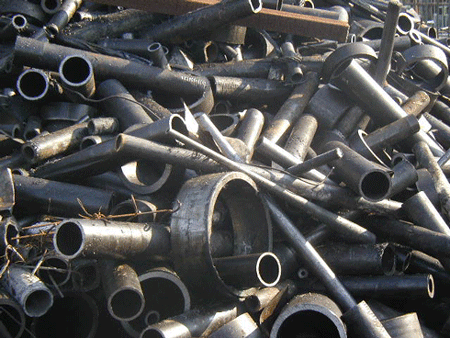
To most, the word ‘scrap’ evokes visions of unwanted, discarded leftovers. However, to the steel industry, scrap represents a vital resource that enhances all aspects of steelmaking.
The recycling of scrap metal is an integral part of modern steelmaking, improving the industry's economic viability and reducing environmental impact. The recycling of steel scrap reduces the need for iron ore extraction, significantly reducing CO2 emissions, energy and water consumption and air pollution.
As a result of these efficiencies, steel scrap is increasingly being regarded as a raw material for manufacturing new products worldwide. Ferrous scrap – iron and steel – has become a globally traded commodity. The increased demand for steel scrap is reflected in recent trade statistics.
The United Nations Commodity Trade Statistics Database shows that the volume of global scrap exports increased from 9.3 million tonnes in 1990 to 106 million tonnes in 2011. Figures from the Bureau of International Recycling show that total world steel scrap use increased 7.6% in 2011 to reach 570 million tonnes.
The globalization of the ferrous scrap market, however, also places stresses on the system. The long lifespan of steel products means that the amount of steel available for recycling cannot keep up with the current world demand for new steel products. With steel, structures can last longer than 60 years and cars often last longer than 12 years; steel products can be seen as scrap-in-inventory – meaning that the steel will not be ready for recycling until the long life of the product comes to an end.
A positive aspect of steel is the ease of recycling when products finally do reach the end of their life. The ability to recover and collect old steel products for subsequent recycling is greatly enhanced by the inherent magnetic properties of steel; consequently, a large tonnage of steel becomes available for recycling every year.
Figures from the US Census Bureau and the US International Trade Commission demonstrate that the US is the world’s largest exporter of ferrous scrap – exporting nearly 23 million tonnes of iron and steel scrap in 2011. Globally, China, Taiwan, South Korea, India, Canada, and Turkey are the largest markets for exports of US steel scrap in that same period.
Ferrous scrap exports from the EU to third countries reached a record high in 2012. The 27 member states exported around 19.22 million tonnes of iron and steel wastes and scrap valued at €6.8 billion to countries outside the Union (extra-EU trade), according to preliminary figures released by the European Statistical Office, Eurostat. The export volume exceeded the 2011 amount of 18.81 million tonnes by 407,000 tonnes or 2.2%. The UK was by far the largest exporter of the EU-27, shipping nearly 5.2 million tonnes of ferrous scrap outside the EU. The most important destination country for EU ferrous scrap was Turkey. At 11.05 million tonnes and a value of €3.3bn, around 58% of all extra-EU ferrous scrap exports headed to this country (2011: 9.97 million tonnes, €3.1bn).
North America is also one of the largest consumers of its own steel scrap – recycling more than 70% of that scrap domestically, with mini-mills being the primary source of recycled steel. Mini-mills use electric arc furnaces, which melt scrap metal via the heat produced by an electric arc. US producers Nucor (one of the world's largest steel producers), as well as one of its competitors, Commercial Metals Company (CMC) use mini-mills exclusively. Since the electric arc furnace can be easily started and stopped on a regular basis, mini-mills can follow the market demand for their products easily, operating on 24 hour schedules when demand is high and cutting back production when sales are lower.
“This high level of scrap consumption is a reflection of the steel industry’s commitment to conserving energy and natural resources,” said Gregory Crawford, executive director of the Steel Recycling Institute in North America. “Scrap steel is used in everyday products, including packaging, appliances, automobiles and construction. Each year, more steel is recycled in North America than paper, aluminum, plastic and glass combined.”
This flow of scrap also faces challenges in the form of trade restrictions. The Organization for Economic Cooperation and Development (OECD) reported in 2012 that North American and European ferrous scrap is traded openly, but that about 19 percent of the scrap trade is burdened by various trade restrictions.
The 2012 OECD report noted that “waste and scrap exports are restricted in many parts of the world. Waste and scrap trade involving iron and steel and non-ferrous base metals (copper, aluminum, lead and zinc) tends to be more regulated than trade involving other metals.”
The OECD found that, in 2009, at least 19% of scrap of iron and steel, exported by a total of 34 countries, was subject to export restrictions. “Export restrictions dampen trade flows,” stated the report. “In fact, some exports actually will not take place due to the very fact that export restrictions are in place. Export activity would be higher if restrictions did not exist.”
The rationales that governments cite most frequently as motivating their use of the restrictions include safeguarding domestic supplies, controlling illegal exports, and protecting local industry. Non-automatic export licensing, export taxes and other export prohibitions were among the measures used to regulate the export of iron and steel scrap, according to the OECD.

[ News ]Steel: Reaching new heights


Expected to be completed in five years, construction on what will be the world’s tallest building in the Saudi Arabian coastal city of Jeddah is under way. At a height of over 1,000 metres and a total construction area of 530,000 square metres, the Kingdom Tower is expected to cost US$1.2 billion.

An estimated 80,000 tonnes of steel will be required in the building’s construction with the 160 floors accommodating a mix of residential, office space and commercial units. Furthermore, the 1 kilometre high building will feature the world’s highest observation deck on the 157th floor.

The Kingdom Tower’s design is both highly technological and organic according to its architects, Adrian Smith + Gordon Gill Architecture, with tapered wings producing an aerodynamic shape that helps to reduce structural loading due to wind vortex shedding. In addition, the building’s exterior wall will feature a high performance system that will minimise energy consumption by reducing thermal load. The new construction will take advantage of new and innovative thinking about technology, building materials, life-cycle considerations and energy conservation.

Kingdom Tower, Jeddah, Saudi Arabia

When completed, the Kingdom Tower will stand 173 metres taller than the Burj Khalifa in Dubai to become the world’s tallest building. The Kingdom Tower will have a total of 59 elevators, five of which will be double-deck elevators, as well as 12 escalators. It will be the centrepiece and first construction phase of the US$20 billion Kingdom City development near the Red Sea.

[ Summary ] Steel Facts

This article is originally published in world steel asscociation website

Integrity is at the heart of the steel industry.


Nothing is more important to us than the well-being of our people and the health of our environment. Wherever we have worked, we have invested for the future and strived to build a sustainable world. We enable society to be the best it can be. We feel responsible; we always have. We are proud to be steel.
Key facts:
  • In 2015, 75 members of worldsteel signed a charter committing them to improve social, economic and environmental performance.
     
  • Steel is an integral part of the circular economy promoting zero waste, reuse of resources and recycling, thus helping build a sustainable future.
     
  • Steel helps people in times of natural disasters; earthquakes, storms, flooding, and other catastrophes are mitigated by steel products.
     
  • Sustainability reporting at a global level is one of the major efforts that the steel industry undertakes to manage its performance, demonstrate its commitment to sustainability and to enhance transparency. We are one of the few industries to have done so since 2004.

A healthy economy needs a healthy steel industry providing employment and driving growth.


Steel is everywhere in our lives for a reason. Steel is the great collaborator, working together with all other materials to advance growth and development. Steel is the foundation of the last 100 years of progress. Steel will be equally fundamental to meeting the challenges of the next 100.
Key facts:
  • Average world steel use per capita has steadily increased from 150kg in 2001 to 208 kg in 2015, making the world more prosperous. 
  • Steel is used in every important industry; energy, construction, automotive and transportation, infrastructure, packaging and machinery.
     
  • The steel industry is the second biggest industry in the world after oil and gas with an estimated global turnover of 900 billion USD. 
  • By 2050, steel use is projected to increase to be 1.5 times higher than present levels in order to meet the needs of our growing population.
     
  • Skyscrapers are made possible by steel. The housing and construction sector is the largest consumer of steel today, using around 50% of steel produced.

Let's talk about steel


We recognise that, because of its critical role, people are interested in steel and the effect it has on the global economy. We are committed to being open, honest and transparent in all our communications about our industry, its performance and the impact we have.
Key facts:
  • The steel industry publishes data on production, demand and trade at national and global levels, which is used for analysing economic performance and making forecasts.
     
  • The steel industry presents its sustainability performance with eight indicators on a global level every year.
     
  • The steel industry proactively participates in OECD, IEA and UN meetings, providing all the information required on key industry topics which have an impact on our society.
     
  • The steel industry shares its safety performance and recognises excellent safety and health programmes every year.
     
  • The steel industry collects CO2 emissions data, providing benchmarks for the industry to compare and improve on.

There is always a good reason to choose steel.

 
Steel allows you to make the best material choice regardless of what you want to do. The excellence and variety of its properties mean steel is always the answer.
Key facts:
  • Steel is safer to use because its strength is consistent and can be designed to withstand high-impact crashes.
     
  • Steel offers the most economic and the highest strength to weight ratio of any building material.
     
  •  Steel is the material of choice because of its availability, strength, versatility, ductility, and recyclability.
     
  • Steel buildings are designed to be easy to assemble and disassemble, ensuring big environmental savings.
  • Steel bridges are four to eight times lighter than those built from concrete.

You can rely on steel. Together we find solutions.


For the steel industry customer care is not just about quality control and products at the right time and price, but also enhanced value through product development and the service we provide. We collaborate with our customers to improve steel types and grades constantly, helping to make the customer manufacturing process more effective and efficient.
Key facts:
  •    The steel industry publishes the advanced high-strength steels application guidelines, actively assisting automakers in applying them.
     
  • The steel industry provides steel life cycle inventory data of 15 key products which helps customers understand the overall environmental impact of their products.
     
  • The steel industry proactively participates in national and regional certification schemes, helping to inform customers and enhance supply chain transparency.
     
  • The steel industry invests over €80 million in research projects in the automotive sector alone in order to meet customers’ changing needs.   

Steel enables innovation. Steel is creativity, applied.


Steel’s properties make innovation possible, allowing ideas to be achieved, solutions to be found and possibilities to be reality.
Steel makes the art of engineering possible, and beautiful.
Key facts:
  • New lightweight steel makes applications lighter and more flexible while retaining the required high strength.
     
  • Modern steel products have never been more sophisticated. From smart car designs to high-tech computers, from cutting edge medical equipment to state-of-the-art satellites.
     
  • Architects can create any shape or span they desire and steel structures can be designed to suit their innovative designs.
     
  • New and better ways of making modern steel are invented every year. In 1937, 83,000 tonnes of steel were needed for the Golden Gate Bridge, today, only half of that amount would be required.
     
  • Over 75% of the steels in use today did not exist 20 years ago. 

People are proud to work in steel.

 
Steel provides universally valued employment, training and development. A job in steel places you in the centre of some of the greatest technology challenges of today with an unparalleled opportunity to experience the world. There is no better place to work and no better place for your best and brightest.
Key facts:
  • The steel industry employs over 8 million people globally, equivalent to the population of Switzerland.
     
  • The steel industry offers employees the opportunity to further their education and develop their skills, providing on average 8 days of training per employee per year.
     
  • The steel industry is committed to the goal of an injury-free workplace and organises an industry-wide safety audit on Steel Safety Day every year.
     
  • steeluniversity, a web-based industry university delivers education and training to the current and future employees of steel companies and related businesses, offering more than 30 training modules.
     
  • The lost-time injury frequency rate has improved by 71% since 2004.

Steel cares for its community.

We care about the health and well-being of both the people who work with us and live around us. Steel is local – we touch people’s lives and make them better. We create jobs, we build a community, we drive a local economy for the long term.
Key facts:
  • For 2013, the steel industry reported distributing 876 billion USD to society directly and indirectly, including 100 billion USD in tax revenue.
     
  • Many steel companies build roads, transport systems, schools and hospitals in the areas around their sites.
     
  • In developing countries, steel companies are often more directly involved in the provision of healthcare services and education for the wider community.
     
  • Once established, steel plant sites operate for decades, providing long-term stability in terms of employment, community benefits and economic growth.
     
  • Steel companies generate jobs and substantial tax revenues which benefit the local communities in which they operate.

Steel is at the core of a green economy.


The steel industry does not compromise on environmental responsibility. Steel is the world’s most recycled material and 100% recyclable. Steel is timeless. We have improved steel production technology to the point where only the limits of science confine our ability to improve. We need a new approach to push these boundaries. As the world looks for solutions to its environmental challenges, all of these depend on steel.

Key facts:
  • Around 90% of water used in the steel industry is cleaned, cooled and returned to source. Most of the loss is due to evaporation. Water returned to rivers and other sources is often cleaner than when extracted.
     
  • The energy used to produce a tonne of steel has been reduced by 60% in the last 50 years.
     
  • Steel is the most recycled material in the world, with over 650 mega tonnes recycled annually.
     
  • The recovery and use of steel industry by-products has reached a worldwide material efficiency rate of 96%.
     
  • Steel is the main material used in delivering renewable energy: solar, tidal and wind.

HOW IS PERFORATED METAL MADE?

WHAT IS PERFORATED METAL?

Perforated metal is a form of sheet metal which has been punched or stamped with a machine to create a pattern of holes. It is also known as perforated sheet, perforated plate, or perforated screen and is commonly made from stainless steel, cold rolled steel, aluminum and more.
Perforated metal was first developed around 150 years ago for the mining industry as a means of filtering coal. Initially, the perforation process was inefficient; involving laborers manually punching individual holes into a metal sheet. Over time, the process has improved through the use of machinery utilizing punching needles arranged in specific patterns.

HOW IS PERFORATED METAL MADE?

The manufacturing process for perforating metal starts with sheet metal. Sheet metal is thin and flat, and can be cut and bent into different shapes. In North America, the thickness of the sheet metal is specified in gauges; the larger the gauge number, the thinner the metal. In the rest of the world, sheet metal thickness is simply measured in millimeters.
The most common method of perforating metal uses a rotary pinned perforation roller. This is a large cylinder with sharp, pointed needles on the outside to punch holes into the metal. As the sheet metal is run across the perforation roller, it rotates, continuously punching holes in the passing sheet. The needles on the roller, which can produce a wide variety of hole sizes, are sometimes heated to simultaneously melt the metal which forms a reinforced ring around the perforation.
Another common method is “die and punch” perforating. During this process, a sheet with needles is repeatedly pressed onto the passing metal which punches holes into the sheet. The pieces remaining from the punching are then sheared off and the surface is smoothed. The die and punch method is very efficient and can perforate a large surface of sheet very quickly.
The most advanced method available is laser perforation. This process is very sophisticated and precise, but also the most expensive. Laser perforation produces results similar to rotary pinned perforation with hot needles, but maintains a higher level of consistency and control over the hole sizes and pattern.

APPLICATIONS

Perforated metals are very popular in contemporary architecture as they lend themselves to creative and unique designs. They also have a number of practical benefits:
  • Sun protection and climate control: Perforated metal sheets are excellent at providing rooms with air flow and shade, often used as sun protection screens in rooms that require ventilation. Although they appear to be a design element, their permeable nature allows the free movement of air, resulting in substantial energy savings on heating, ventilation and air conditioning.
  • Noise reduction: Perforated metal sheets are often used for noise reduction walls and roof systems. In noisy environments, they can limit the adverse effects of noise on workers’ health.
  • Balustrade screening panels: Perforated metal sheets are used in panels for balconies, stairways, and balustrades screens. They offer weather resistant protection coupled with an attractive design.
Other industries that utilize perforated metals are:
  • Food and beverage: Used for drain dryers, wine vats, fish farms, sorting machines, fruit & vegetable presses and baking trays.
  • Chemical and energy: Used for filters, gas purifiers, mine cages, coal washing, battery separator plates and centrifuges.
  • Automotive: Used for oil filters, radiator grilles, running boards, engine ventilation and motorcycle silencers.
  • Material development: Used for blast furnace screens, textile printers and felt mills, cement slurry screens and glass reinforcement.